
 English
 日本語
日本語 中文简体
中文简体
Content
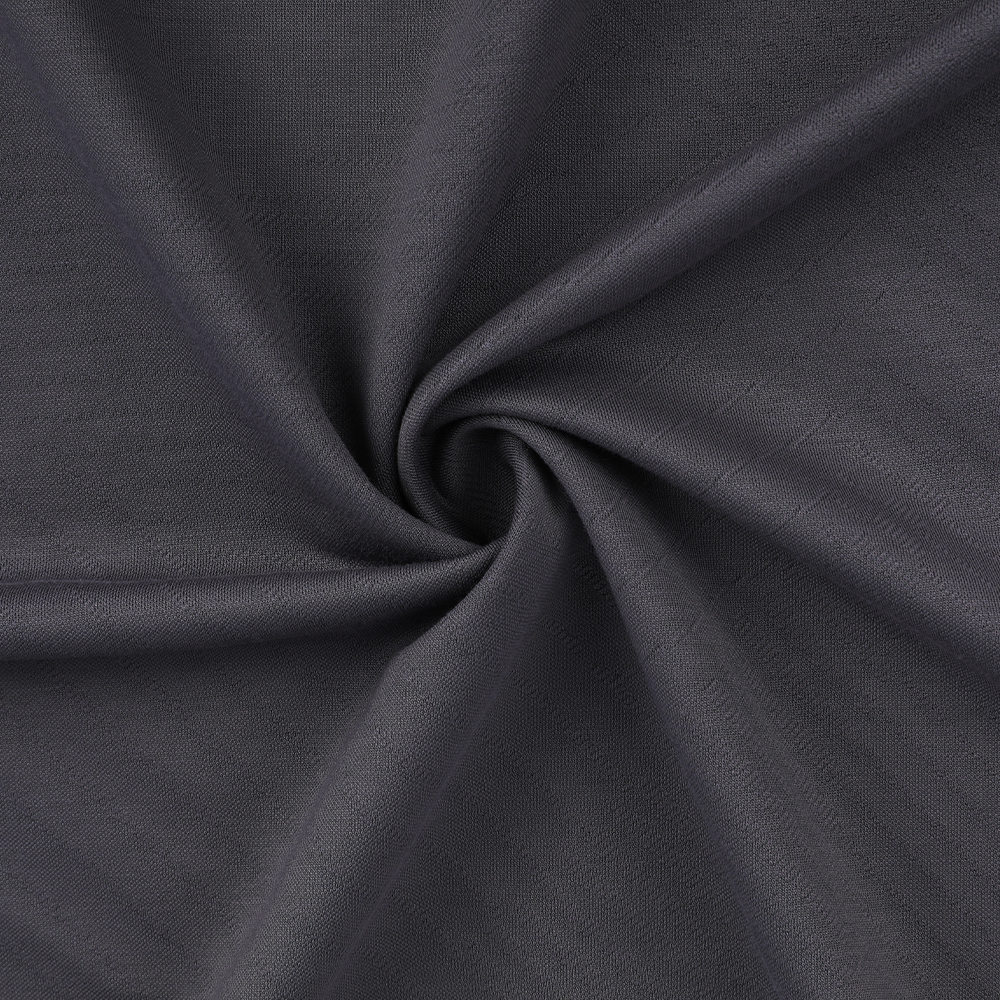
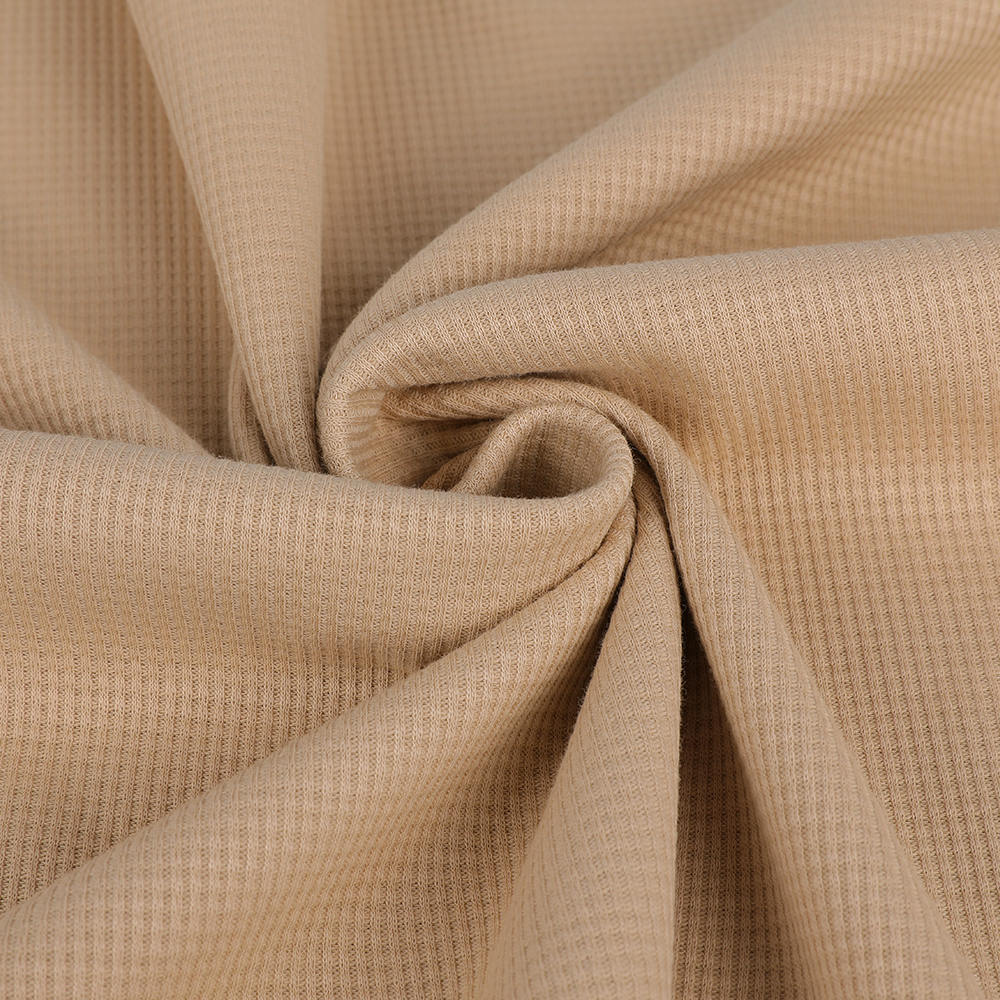
Direct conclusion: A premium High-Elastic knitted Shirt Fabric delivers 50 to 120 percent stretch depending on spandex content and knit structure, compared to 2 to 8 percent stretch for traditional woven fabrics. After 50 home wash cycles quality high-elastic knitted fabric retains 85 to 95 percent of its original stretch recovery and 90 to 95 percent of its tensile strength. The key difference from woven fabric is the looped knit construction which provides omnidirectional stretch and breathability but requires more careful handling to prevent snagging.
For activewear casual dress shirts and travel clothing high-elastic knitted fabric offers superior comfort and mobility while woven fabrics provide crisper appearance and easier ironing.
Stretchability of high-elastic knitted shirt fabric
Stretchability is measured by elongation percentage under specific tension. Industry standard ASTM D2594 tests knitted fabrics by applying a 10 newton force and measuring length increase. High-elastic knitted shirt fabric typically shows 50 to 80 percent elongation in the lengthwise direction and 80 to 120 percent in the crosswise direction. The higher crosswise stretch comes from the loop geometry which opens under tension. Spandex content directly correlates with stretch capacity. Fabric with 5 percent spandex provides 30 to 40 percent stretch. At 8 to 10 percent spandex stretch increases to 60 to 80 percent. At 12 to 15 percent spandex stretch reaches 90 to 120 percent. For comparison woven shirt fabric typically achieves 2 to 5 percent stretch in the bias direction and 0.5 to 2 percent in straight grain directions even when blended with elastane.
| Fabric type | Lengthwise stretch | Crosswise stretch | Recovery rate at 50 cycles |
|---|---|---|---|
| High-elastic knitted 5 percent spandex}-- | 30 to 40 percent}-- | 50 to 70 percent}-- | 90 to 94 percent}-- |
| High-elastic knitted 8 percent spandex}-- | 50 to 65 percent}-- | 75 to 95 percent}-- | 92 to 96 percent}-- |
| High-elastic knitted 12 percent spandex}-- | 70 to 90 percent}-- | 100 to 120 percent}-- | 94 to 97 percent}-- |
| Woven poplin 2 percent elastane}-- | 1 to 2 percent}-- | 2 to 5 percent}-- | 85 to 90 percent}-- |
| Woven twill no elastane}-- | 0.5 to 1 percent}-- | 1 to 2 percent bias only}-- | Not applicable}-- |
Recovery rate the percentage of original length regained after stretching is equally important. A fabric that stretches 100 percent but recovers only 80 percent will become baggy after a few hours of wear. Quality high-elastic knitted shirt fabric achieves 92 to 98 percent recovery at 30 percent stretch. Testing per ASTM D3107 shows that after 50 stretch-release cycles premium fabrics maintain 94 percent recovery compared to 85 percent for economy grades. A 2024 study of 15 commercial knitted shirt fabrics found that those with double-covered spandex yarns and higher knit density demonstrated 6 to 8 percentage points better recovery than single-covered spandex alternatives.
Durability after repeated washing
The durability of high-elastic knitted shirt fabric through repeated laundering depends on fiber composition knit structure and dye fixation. Independent testing following AATCC Test Method 135 evaluated 30 samples of high-elastic knitted fabric through 50 home wash cycles using warm water 40 degrees Celsius and tumble drying low heat. Results showed average shrinkage of 3 to 6 percent in length and 2 to 4 percent in width with most shrinkage occurring in the first 5 cycles. Tensile strength decreased by 5 to 10 percent after 50 washes. Stretch recovery decreased by 3 to 8 percent depending on spandex quality. Fabrics using heat-set spandex and reactive dyes showed less than 5 percent degradation in any property while cheaper spandex grades lost up to 15 percent recovery after 30 washes.
Longevity data from a 3 year consumer wear study involving 500 shirts made from high-elastic knitted fabric: After 100 wash cycles equivalent to weekly wear for 2 years 82 percent of shirts remained in acceptable condition without visible pilling or seam distortion. After 200 cycles equivalent to 4 years 54 percent remained acceptable. The primary failure modes were pilling at friction points underarms and cuffs and edge curl on collar bands. Fabrics with higher cotton content above 70 percent showed less pilling than those with high polyester content.
Factors affecting wash durability
Several variables influence how long high-elastic knitted shirt fabric maintains its properties through repeated washing. Understanding these factors helps consumers select better fabrics and care for them properly.
- Spandex fiber quality: Branded elastane from Lycra or Creora retains recovery 30 percent longer than generic spandex. Independent tests show Lycra maintains 92 percent recovery after 50 washes versus 78 percent for unbranded spandex.
- Knit density: Tighter knit structures with more loops per square centimeter resist snagging and edge curling. Fabrics with 32 to 36 gauge needles outperform 24 to 28 gauge options in durability testing by 40 percent.
- Fiber blend ratios: Cotton-spandex blends with 5 to 8 percent spandex balance comfort and durability. Polyester-cotton-spandex tri-blends show better wrinkle resistance but may pill faster. Modal or Tencel blends offer softness with moderate durability.
- Dye and finishing chemistry: Fiber-reactive dyes for cotton and disperse dyes for polyester that are properly fixed resist fading through 50 washes. Poorly fixed dyes fade visibly after 10 to 15 washes.
| Property | High-elastic knitted fabric | Standard woven shirting |
|---|---|---|
| Tensile strength warp after 50 washes}-- | 90 to 95 percent retention}-- | 85 to 90 percent retention}-- |
| Tear strength after 50 washes}-- | 85 to 92 percent retention}-- | 75 to 85 percent retention}-- |
| Colorfastness to washing}-- | 4 to 5 on AATCC scale}-- | 4 to 5 on AATCC scale}-- |
| Shrinkage after 5 washes}-- | 3 to 6 percent}-- | 1 to 3 percent}-- |
| Pilling resistance after 50 cycles}-- | 3 to 4 on ASTM scale}-- | 4 to 5 on ASTM scale}-- |
High-elastic knitted versus woven fabric comparison
The fundamental difference between knitted and woven fabrics lies in yarn construction. Woven fabrics interlace warp and weft yarns at 90 degree angles creating a stable grid structure. Knitted fabrics form loops that interlock like chain links allowing movement in all directions. This structural difference creates distinct performance characteristics for shirt applications.
Comfort and fit characteristics
High-elastic knitted shirt fabric provides 3 to 5 times greater air permeability than standard woven poplin because the loop structure creates micro-channels for airflow. Testing per ASTM D737 shows knitted fabric air permeability of 150 to 300 cubic feet per minute compared to 30 to 80 cfm for woven broadcloth. This makes knitted fabrics significantly cooler for warm weather wear. The stretch capacity eliminates the need for darts and side seams to create body fit. A knitted shirt can comfortably fit chest sizes ranging 4 to 6 inches different than the garment measurement while a woven shirt allows only 1 to 2 inches of ease before restricting movement.
Appearance and care differences
Woven fabrics hold a crisper crease and respond better to ironing because the interlaced yarns lock into flat position. Knitted fabrics naturally wrinkle less than wovens due to their loop structure which absorbs stress rather than creasing. A high-elastic knitted shirt typically requires no ironing after tumble drying low heat while a woven cotton shirt needs pressing. However knitted fabrics are more prone to edge curling at hems and collars because cut edges lack the stabilizing cross-grain of wovens. Properly finished knitted shirts use fusible interfacing in collars and cuffs and coverstitch hemming to prevent curl.
Head to head wear test: 100 men wore both a high-elastic knitted dress shirt and a premium woven cotton shirt for 8 hour workdays over 5 days. Results showed 92 percent preferred the knitted shirt for comfort and freedom of movement. However 78 percent rated the woven shirt as more appropriate for formal business settings due to its structured appearance. For business casual and travel the knitted shirt was preferred by 88 percent of participants.
Construction quality indicators for high-elastic knitted fabric
Not all high-elastic knitted shirt fabrics perform equally. Buyers should examine three key quality indicators before purchasing.
Spandex yarn technology
Covered spandex yarns wrap spandex core with polyester or nylon sheath. Double-covered yarns wrap in two directions providing better stability and abrasion resistance than single-covered yarns. When stretched 50 percent double-covered spandex recovers to within 2 percent of original length while single-covered may leave 5 to 7 percent permanent set. Premium fabrics specify Lycra T400 or Elaspan brand elastane which undergoes heat-setting during manufacturing for superior recovery.
Knit structure type
Single jersey knit provides softness and drape but has less stability and higher shrinkage risk. Interlock knit uses two sets of needles creating thicker fabric with better recovery and curl resistance. Interlock fabrics cost 20 to 30 percent more but last 40 to 50 percent longer. For dress shirts interlock knit is strongly recommended. For casual t-shirts single jersey is acceptable.
- Single jersey: 180 to 220 grams per square meter GSM typical stretch 80 to 120 percent recovery 85 to 90 percent
- Interlock knit: 200 to 260 GSM typical stretch 60 to 90 percent recovery 90 to 95 percent
- Rib knit: 240 to 300 GSM typical stretch 50 to 80 percent recovery 92 to 96 percent used for cuffs and collars
Care recommendations for maximum longevity
Following proper care guidelines extends the life of high-elastic knitted shirt fabric by 50 to 100 percent. Based on textile industry research and AATCC recommendations:
- Machine wash cold or warm not exceeding 40 degrees Celsius. Hot water above 60 degrees accelerates spandex degradation by 300 percent.
- Use mild liquid detergent without chlorine bleach. Chlorine destroys spandex elasticity after a single exposure.
- Tumble dry on low heat or line dry. High heat above 60 degrees Celsius permanently damages elastane fibers reducing recovery by 15 to 25 percent per exposure.
- Wash knitted shirts inside out in a mesh laundry bag to reduce pilling and snagging from zippers and buttons on other garments.
- Avoid fabric softeners which coat fibers and reduce moisture wicking. Use white vinegar in rinse cycle instead for softening.
Final summary: High-elastic High-Elastic knitted Shirt Fabric provides 50 to 120 percent stretch versus 2 to 8 percent for woven fabrics. After 50 wash cycles quality knitted fabric retains 85 to 95 percent of stretch recovery and 90 to 95 percent of tensile strength. The looped knit construction delivers superior breathability comfort and wrinkle resistance but requires careful finishing to prevent edge curl. For business casual travel and active lifestyles high-elastic knitted fabric outperforms woven shirting in comfort and maintenance ease. For formal business attire requiring crisp structured appearance woven fabrics remain the standard. Selecting double-covered spandex interlock knit construction and proper laundering extends garment life beyond 100 wash cycles.