
 English
 日本語
日本語 中文简体
中文简体
Content
- 1 What Makes Knitted Shirt Fabric Breathable for Summer?
- 2 Why Is Pique Knitted Shirt Fabric a Wardrobe Staple?
- 3 What Are the Benefits of Polyester Cotton Knitted Shirt Fabric?
- 4 Where to Source Quality Knitted Shirt Fabric for Men Wholesale?
- 5 What Is Slub Knitted Shirt Fabric and Why Is It Trending?
- 6 Why Partner with Jiaxing Jinkaiyue Knitted Fabric Co., Ltd.?
- 7 Frequently Asked Questions (FAQ)
- 8 References
In textile engineering, knitted shirt fabric refers to a class of weft-knitted structures engineered for comfort, drape, and dimensional stability in upper garments. This article provides an in-depth technical analysis targeting fabric buyers, garment manufacturers, and product developers. We examine five critical specification areas with comparative data, production insights, and quality benchmarks relevant to the apparel industry.
What Makes Knitted Shirt Fabric Breathable for Summer?
Fiber Selection: Cotton, Linen, and Blends
Knitted shirt fabric breathable summer performance begins with fiber thermodynamics and moisture management. Key fiber properties affecting breathability include:
- Moisture regain (%): Cotton 8.5, Linen 12.0, Polyester 0.4.
- Thermal conductivity (W/m·K): Linen 0.18, Cotton 0.16, Polyester 0.14.
- Air permeability (cm³/cm²/s at 100 Pa): Highly dependent on stitch structure.
Stitch Geometry and Air Permeability
The loop structure determines open area and airflow. Below is a comparison of common stitch types used in summer knits:
| Stitch Type | Air Permeability (cm³/cm²/s @ 125 Pa) | Fabric Weight (g/m²) | Typical Application |
|---|---|---|---|
| Plain Jersey (single jersey) | 80–120 | 120–150 | T-shirts, lightweight shirts |
| Pique (Swiss pique) | 150–200 | 160–200 | Polo shirts |
| Eyelet (mesh) | 250–350 | 130–170 | Sport shirts, summer tops |
| Rib (1x1) | 60–90 | 180–220 | Cuffs, collars, fitted shirts |
How Jinkaiyue Optimizes Breathability with Long-Staple Cotton
Jiaxing Jinkaiyue Knitted Fabric Co., Ltd. specializes in long-staple cotton with fiber lengths >35 mm, which reduces hairiness and allows tighter twist factors without sacrificing softness. This results in smoother yarns that enhance air permeability by up to 15% compared to conventional cotton.
Why Is Pique Knitted Shirt Fabric a Wardrobe Staple?
The Honeycomb Structure: Aesthetic and Functional
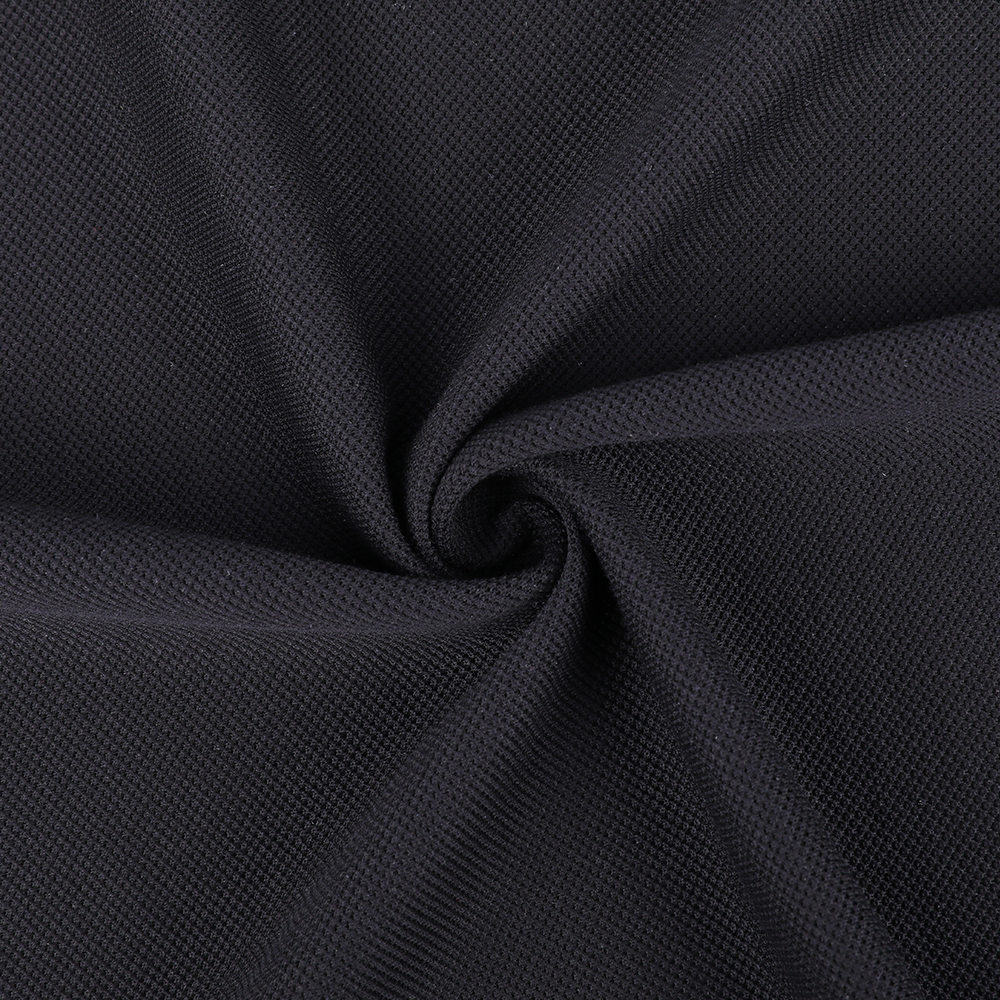
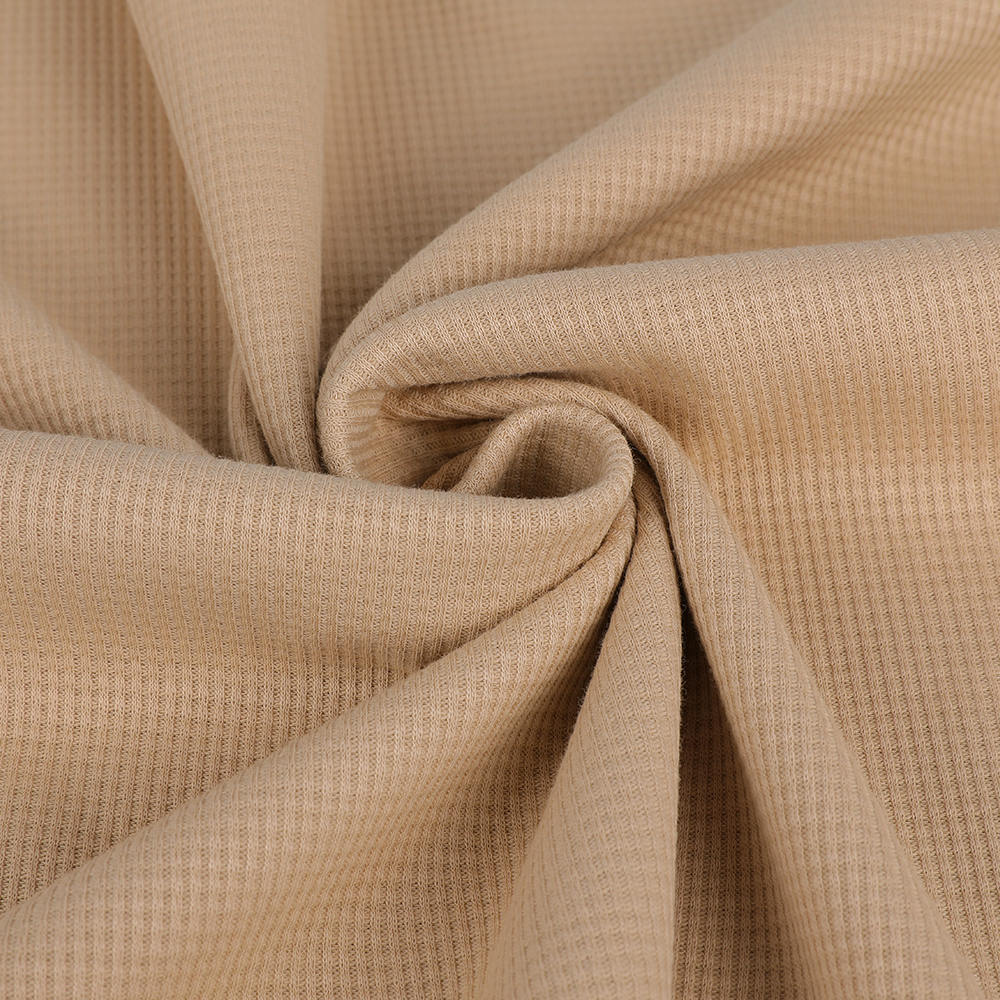
Pique knitted shirt fabric is characterized by a textured, waffle-like surface created by a combination of knit and tuck stitches. This structure offers:
- Enhanced breathability due to raised pattern creating micro-channels.
- Reduced skin contact area, improving moisture wicking.
- Dimensional stability and resistance to stretching.
Pique vs. Jersey: A Comparative Analysis
Below is a technical comparison of pique versus standard jersey for shirt applications:
| Property | Pique (Swiss pique) | Jersey (plain) |
|---|---|---|
| Stitch density (courses/cm) | 14–18 | 16–22 |
| Bursting strength (kPa, for 180 g/m² cotton) | 350–420 | 280–340 |
| Air permeability (cm³/cm²/s) | 150–200 | 80–120 |
| Dimensional stability (% shrinkage after 5 washes) | <3% | 4–6% |
Swiss Pique Stitch Expertise at Jiaxing Jinkaiyue Knitted Fabric Co., Ltd.
Founded in 2000, Jiaxing Jinkaiyue Knitted Fabric Co., Ltd. is dedicated to producing high-end knitting fabrics. Our advanced circular knitting machines from Italy and Germany enable precise execution of Swiss pique stitch, six-course Punto di Roma, and other complex structures with strict quality control.
What Are the Benefits of Polyester Cotton Knitted Shirt Fabric?
Mechanical Properties: Strength, Durability, and Shrinkage Control
Polyester cotton knitted shirt fabric combines the comfort of cotton with the strength and dimensional stability of polyester. Typical blend ratios range from 65/35 to 50/50 cotton/polyester. Key mechanical improvements include:
- Tensile strength increase: 30–50% compared to 100% cotton.
- Abrasion resistance (Martindale): >20,000 cycles vs. 10,000 for cotton.
- Shrinkage: ≤2% after industrial laundering.
Moisture Management and Comfort
While polyester is hydrophobic, modern wicking finishes and engineered cross-sections improve moisture transport. Below is a comparison of moisture management properties:
| Property | 100% Cotton | 50/50 Polyester/Cotton | 100% Polyester (microfiber) |
|---|---|---|---|
| Moisture regain (%) | 8.5 | 4.2 | 0.4 |
| Drying time (hours, at 25°C/60% RH) | 3.5 | 2.0 | 1.0 |
| Wicking height (mm/30 min) | 60–80 | 90–120 (with treatment) | 120–150 |
Blending Expertise at Jinkaiyue
Jinkaiyue utilizes advanced blending techniques for mulberry silk, long-staple cotton, linen, wool, cashmere, and various blends. Our polyester-cotton knits maintain even fiber distribution and consistent yarn count, minimizing barré effects common in blended yarns.
Where to Source Quality Knitted Shirt Fabric for Men Wholesale?
Key Considerations for Bulk Buyers: Consistency, MOQ, and Lead Times
When sourcing knitted shirt fabric for men wholesale, buyers must evaluate:
- Shade consistency: ΔE < 0.8 across production lots (AATCC 173).
- Minimum order quantity (MOQ): Typically 500–1000 kg per color for custom developments.
- Lead times: 30–45 days for standard replenishment; 60–90 days for custom stitch or fiber blends.
Certifications and Quality Assurance Systems
Reputable suppliers maintain certifications including:
- ISO 9001:2015 quality management.
- OEKO-TEX® Standard 100 (product class I or II).
- Global Organic Textile Standard (GOTS) for organic cotton.
Jinkaiyue's Production Capacity and Machinery Park
Jiaxing Jinkaiyue Knitted Fabric Co., Ltd. employs approximately 300 staff, with 20% involved in research, technology, and design. The company invests in cutting-edge machinery from Italy, Germany, Switzerland, Japan, and Taiwan. This infrastructure ensures consistent quality for wholesale orders of any scale.
What Is Slub Knitted Shirt Fabric and Why Is It Trending?
The Aesthetic of Imperfection: Understanding Slub Yarn
Slub knitted shirt fabric is produced using yarn with intentional thick-thin variations (slubs) along its length. These slubs create a textured, irregular surface that adds visual interest and a natural, linen-like appearance. Slub yarns are characterized by:
- Slub frequency: number of slubs per meter (typically 5–20).
- Slub intensity: ratio of thick to thin section (1.5:1 to 3:1).
- Slub length: 2–10 cm depending on desired effect.
Structural Integrity and Dyeing Behavior
The uneven yarn structure affects dye uptake: thicker slub areas absorb more dye, creating a subtle heather or mottled effect. Below is a comparison of dyeing outcomes:
| Slub Characteristic | Dye Appearance | Tensile Strength Retention (%) | Typical End Use |
|---|---|---|---|
| Fine slub (intensity 1.5x) | Subtle tonal variation | 95 | Casual shirts, blouses |
| Medium slub (intensity 2x) | Distinct slub markings | 88 | Fashion tops, resort wear |
| Bold slub (intensity 3x) | High-contrast texture | 80 | Designer statement pieces |
Achieving Consistent Slub Effects with Advanced Circular Knitting
Jinkaiyue's circular knitting machines from Japan and Taiwan allow precise control of slub placement and frequency. Our technical team works with spinners to develop custom slub yarns that maintain knitability and minimize fabric defects.
Why Partner with Jiaxing Jinkaiyue Knitted Fabric Co., Ltd.?
About Jiaxing Jinkaiyue Knitted Fabric Co., Ltd.
Founded in 2000, Jiaxing Jinkaiyue Knitted Fabric Co., Ltd. is dedicated to producing high-end knitting fabrics. The company specializes in a wide range of materials, including mulberry silk, long-staple cotton, linen, wool, cashmere, and various blends of fibers.
R&D, Technology, and Design Capabilities
With 20% of our 300 employees in research, technology, and design, we continuously innovate stitch structures and fiber combinations. Our capabilities include plain stitch, rib stitch, jacquard stitch, high-pile stitch, single-blister stitch, loop transfer stitch, pelerine stitch, eyelet stitch, Swiss pique stitch, and six-course Punto di Roma.
A Commitment to High-End Knitted Fabrics Since 2000
By investing in machinery from Italy, Germany, Switzerland, Japan, and Taiwan, Jinkaiyue ensures precision and consistency across all knitted shirt fabric categories. We welcome B2B partners seeking quality, innovation, and reliable supply.
Frequently Asked Questions (FAQ)
- Q: What is the difference between single jersey and pique knit?
A: Single jersey has a smooth face and textured back, while pique knitted shirt fabric features a waffle-like texture created by tuck stitches, offering higher breathability and better dimensional stability. - Q: Can polyester cotton knitted shirt fabric be made breathable for summer?
A: Yes, with appropriate stitch selection (e.g., pique or eyelet) and moisture-wicking finishes, polyester-cotton blends can achieve excellent breathability suitable for warm weather. - Q: What is the typical shrinkage percentage for high-quality knitted shirting?
A: Premium fabrics, such as those from Jinkaiyue, are pre-shrunk to ≤3% in both length and width, meeting AATCC 135 specifications. - Q: How do I verify fabric quality before wholesale purchase?
A: Request shade bands, physical swatches, and test reports for weight, shrinkage, colorfastness (AATCC 61), and pilling resistance (ASTM D4970). - Q: What MOQ does Jinkaiyue require for custom slub knitted shirt fabric?
A: For custom slub yarn development, typical MOQ is 500 kg per color. Standard slub fabrics may have lower MOQs; please contact our sales team for specifics.
References
- AATCC Test Method 135 – Dimensional Changes of Fabrics after Home Laundering.
- ASTM D737 – Standard Test Method for Air Permeability of Textile Fabrics.
- ASTM D3787 – Bursting Strength of Knitted Goods (Constant-Rate-of-Traverse Ball Burst Test).
- ISO 6330 – Textiles – Domestic washing and drying procedures for textile testing.
- Spencer, D.J. (2001). Knitting Technology: A Comprehensive Handbook and Practical Guide. Woodhead Publishing.
- OEKO-TEX® Standard 100 – General and Special Conditions.