
 English
 日本語
日本語 中文简体
中文简体
Content
- 1 Understanding Cotton Fiber Grades and Technical Specifications
- 2 Processing Technologies and Their Impact on Fabric Performance
- 3 Organic and Sustainable Cotton Certification Standards
- 4 Weight Categories and End-Use Applications
- 5 Regional Sourcing Dynamics and Supply Chain Considerations
- 6 Finishing Treatments and Value-Added Processing
- 7 Cost Structure Analysis and Procurement Optimization
- 8 Frequently Asked Questions (FAQ)
- 8.1 What is the difference between carded and combed cotton jersey fabric?
- 8.2 How do I verify authentic organic cotton fabric certification?
- 8.3 What GSM weight is optimal for high-quality T-shirt manufacturing?
- 8.4 Why does Pima cotton command premium pricing in T-shirt fabric?
- 8.5 What quality control tests should I require from my fabric supplier?
- 9 References
When sourcing t shirt 100 cotton fabric for manufacturing or wholesale distribution, understanding the technical specifications, fiber grading systems, and supply chain dynamics is essential for maintaining product quality and margin optimization. This guide provides engineering-level insights into cotton fabric selection, processing methods, and procurement strategies tailored for B2B buyers, manufacturers, and textile engineers.
Understanding Cotton Fiber Grades and Technical Specifications
Fiber Length and Micronaire Values
Cotton fiber quality directly impacts fabric performance, dye uptake, and finished garment durability. The primary classification systems used in international trade include:
- Staple length categories: Short-staple (below 1 inch), medium-staple (1-1.25 inches), long-staple (1.25-1.5 inches), and extra-long staple (above 1.5 inches)
- Micronaire range: Measures fiber fineness and maturity, with optimal ranges between 3.5-4.9 for ring-spun 100 cotton jersey fabric wholesale applications
- Strength parameters: Fiber strength measured in grams per tex (g/tex), with premium grades exceeding 30 g/tex
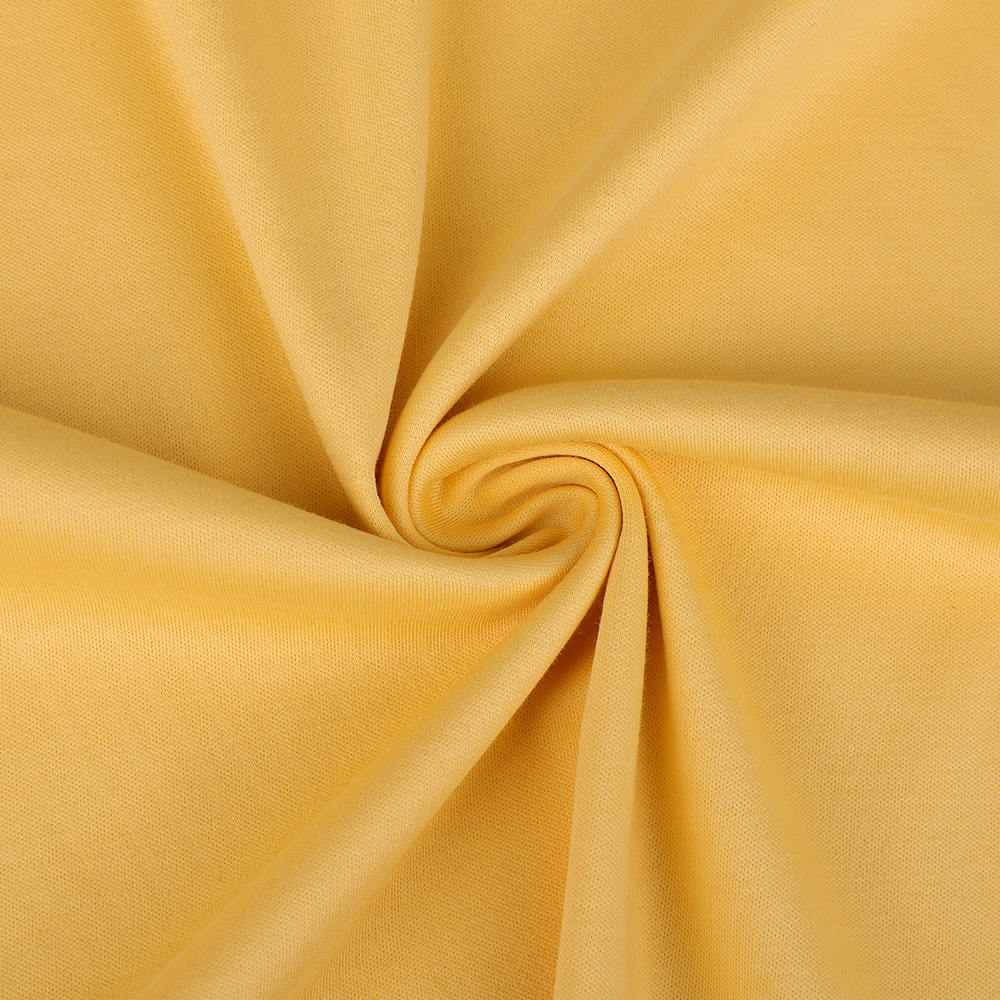
Longer staple lengths produce smoother yarns with fewer protruding fibers, resulting in superior surface characteristics for organic cotton t shirt fabric by the yard applications where skin contact comfort is prioritized.
Yarn Count and Fabric Construction
The relationship between yarn count (Ne) and fabric weight (gsm) determines end-use suitability:
| Yarn Count Range | Typical Fabric Weight | Primary Application | Thread Density (ends x picks) |
| 20-24 Ne | 180-200 gsm | Standard casual wear | 40x32 to 50x40 |
| 26-30 Ne | 160-180 gsm | Premium lightweight tees | 50x40 to 60x50 |
| 32-40 Ne | 140-160 gsm | High-fashion, luxury segment | 60x50 to 80x60 |
| 16-20 Ne | 200-280 gsm | Heavyweight cotton t shirt material suppliers segment | 32x24 to 40x32 |
Single jersey constructions utilize latch needle knitting machines with gauge ranges from 18GG to 28GG, where higher gauge numbers indicate finer needle spacing and tighter fabric structures.
Processing Technologies and Their Impact on Fabric Performance
Combing vs. Carding Processes
The preparation method significantly affects yarn quality and subsequent fabric characteristics:
Carded cotton undergoes opening, cleaning, and drawing processes without fiber alignment removal, resulting in:
- Higher short fiber content (15-20%)
- Increased yarn hairiness
- Lower production costs suitable for commodity t shirt 100 cotton fabric markets
Combed cotton incorporates additional processing steps including lap formation, combing (removing 15-25% of short fibers), and sliver formation, delivering:
- Enhanced yarn strength and uniformity
- Reduced pilling propensity
- Superior surface smoothness required for pima cotton fabric for t shirts and high-end applications
| Processing Parameter | Carded Cotton | Combed Cotton |
| Short Fiber Removal | None | 15-25% eliminated |
| Yarn Tenacity (cN/tex) | 18-22 | 24-28 |
| Hairiness Index | 5.0-6.5 | 3.0-4.5 |
| Cost Premium | Baseline | 20-35% increase |
| Typical End Use | Mass market basics | Premium combed cotton single jersey fabric manufacturer products |
Knitting Machine Specifications
Modern 100 cotton jersey fabric wholesale production utilizes circular knitting machines with specific technical parameters:
- Diameter range: 30-40 inches for body fabric production
- Feeder density: 72-108 feeders for pattern complexity and production speed
- Needle selection: Mechanical or electronic jacquard systems for texture variation
- Stitch density control: Computerized tension management maintaining ±2% weight consistency
Organic and Sustainable Cotton Certification Standards
Global Organic Textile Standard (GOTS) Requirements
For organic cotton t shirt fabric by the yard procurement, GOTS certification represents the most comprehensive processing standard:
- Fiber content: Minimum 70% organic fibers for GOTS label grade, 95% for "organic" designation
- Chemical restrictions: Prohibition of aromatic solvents, heavy metals, and formaldehyde
- Social compliance: Mandatory ILO convention adherence throughout supply chain
- Environmental criteria: Wastewater treatment requirements and energy consumption monitoring
Other Certification Systems Comparison
| Certification | Focus Area | Organic Fiber Requirement | Chain of Custody |
| OEKO-TEX Standard 100 | Harmful substance testing | Not required | Not applicable |
| OCS (Organic Content Standard) | Organic fiber tracking | 5-100% organic | Transaction certificates |
| BCI (Better Cotton Initiative) | Sustainable farming practices | Mass balance system | BCCUs (Better Cotton Claim Units) |
| Fair Trade Certified | Farmer welfare and premiums | Varies by product | Physical or transactional |
Procurement teams should verify certification validity through database checks rather than relying solely on supplier documentation, particularly when sourcing heavyweight cotton t shirt material suppliers from emerging markets.
Weight Categories and End-Use Applications
Lightweight Cotton (120-160 gsm)
Ideal for tropical climates and layering pieces, lightweight t shirt 100 cotton fabric requires specific construction considerations:
- Yarn counts typically 30-40 Ne combed
- Needle gauges 24-28GG for structural stability
- Pre-shrinking treatments essential to prevent dimensional instability
- Common applications: Base layers, summer fashion, promotional merchandise
Mid-Weight Cotton (160-200 gsm)
The industry standard for everyday wear balances durability with comfort:
- 20-26 Ne yarn counts predominate
- 18-22GG knitting machines
- Standard finishing includes bio-polishing for surface smoothness
- Optimal for direct-to-garment printing and screen printing applications
Heavyweight Cotton (200-300 gsm)
Heavyweight cotton t shirt material suppliers serve specialized markets requiring substantial fabric body:
- 16-20 Ne carded or combed yarns
- Lower gauge knitting (16-18GG) creating denser structures
- Enhanced opacity and shape retention
- Preferred for workwear, streetwear, and vintage-style garments
| Weight Category | GSM Range | Recommended Yarn Count | Primary Market Segment |
| Lightweight | 120-160 | 30-40 Ne | Fast fashion, warm climate |
| Mid-weight | 160-200 | 20-26 Ne | Standard retail, promotional |
| Heavyweight | 200-300 | 16-20 Ne | Premium basics, workwear |
Regional Sourcing Dynamics and Supply Chain Considerations
Major Production Regions
The global 100 cotton jersey fabric wholesale market concentrates in specific geographic clusters with distinct competitive advantages:
- South Asia (India, Pakistan, Bangladesh): Cost-competitive carded cotton, strong vertical integration, GOTS-certified organic cotton t shirt fabric by the yard increasingly available
- East Asia (China, Vietnam): Advanced knitting technology, rapid turnaround times, combed cotton single jersey fabric manufacturer expertise
- Turkey and Near East: Proximity to European markets, strong organic cotton infrastructure, Oeko-Tex compliance standard
- Latin America (Peru, Brazil): Pima cotton fabric for t shirts specialization, long-staple fiber availability, vertical manufacturing
Quality Control Protocols for B2B Procurement
Implementing systematic quality assurance prevents costly production errors:
- Incoming fiber inspection: HVI (High Volume Instrument) testing for micronaire, strength, length, and color grade
- Greige fabric examination: ASTM D3776 for weight, ASTM D3775 for thread count, visual defect grading per ASTM D5430
- Processed fabric validation: Shrinkage testing (AATCC 135), colorfastness (AATCC 61), and pilling resistance (ASTM D4970)
- Continuous monitoring: Statistical process control (SPC) charts for weight and width consistency
Finishing Treatments and Value-Added Processing
Mechanical Finishing
Post-knitting treatments modify fabric hand and performance characteristics:
- Compacting: Reduces residual shrinkage from 15-20% to 3-5% through mechanical compression and heat setting
- Sanforizing: Controlled compressive shrinkage pre-treatment ensuring dimensional stability
- Peaching/sueding: Mechanical abrasion creating surface fuzz for vintage aesthetics
- Calendering: High-pressure pressing for lustrous surface finish on pima cotton fabric for t shirts
Chemical Finishing
| Treatment Type | Chemical Basis | Functional Benefit | Considerations |
| Softening | Silicone microemulsions | Enhanced hand feel | Potential impact on absorbency |
| Easy care | DMDHEU crosslinkers | Wrinkle resistance | Formaldehyde release concerns |
| Moisture management | Hydrophilic finishes | Wicking properties | Compatibility with 100% cotton |
| Antimicrobial | Silver nanoparticles or quaternary compounds | Odor control | Regulatory restrictions in EU |
Cost Structure Analysis and Procurement Optimization
Raw Material Cost Components
Understanding cost drivers enables strategic sourcing decisions for t shirt 100 cotton fabric :
- Fiber cost: Typically 50-60% of greige fabric cost, fluctuating with ICE cotton futures and basis differentials
- Processing charges: Carded knitting $0.80-1.20/kg, combed knitting $1.20-1.80/kg depending on region and complexity
- Certification premiums: Organic certification adds 15-25% to fiber costs, GOTS processing adds 10-15% to finishing
Volume and Lead Time Strategies
Optimizing procurement parameters for heavyweight cotton t shirt material suppliers relationships:
- Minimum Order Quantities (MOQ): Greige fabric typically 500-1000 kg per color, finished fabric 300-500 kg for standard colors
- Lead time variables: Stock service 1-2 weeks, made-to-order greige 2-3 weeks, dyed and finished 4-6 weeks
- Consolidation benefits: Combining orders across styles to meet dye lot minimums reduces per-unit costs 8-12%
- Seasonal planning: Pre-booking cotton during harvest seasons (Northern Hemisphere: September-November) locks favorable fiber pricing
Frequently Asked Questions (FAQ)
What is the difference between carded and combed cotton jersey fabric?
Carded cotton jersey retains short fibers and impurities, resulting in a softer, more textured hand at lower cost but with increased pilling tendency. Combed cotton undergoes additional processing to remove short fibers, producing stronger, smoother, and more durable fabric ideal for premium t shirt 100 cotton fabric applications. Combed varieties typically command 20-35% price premiums but offer superior printability and longevity.
How do I verify authentic organic cotton fabric certification?
Request the supplier's GOTS or OCS transaction certificate (TC) for the specific lot, then verify the certificate number through the certifying body's online database (e.g., OneCert, Control Union, or ICEA). For organic cotton t shirt fabric by the yard , ensure the TC covers both the organic fiber content and the processing/handling stages. Be wary of self-declared "organic" claims without third-party validation.
What GSM weight is optimal for high-quality T-shirt manufacturing?
For standard retail quality, 160-180 gsm provides optimal balance of durability and comfort. Heavyweight cotton t shirt material suppliers typically provide 200-280 gsm for premium vintage styles or workwear requiring enhanced opacity. Lightweight 140-160 gsm suits fashion-forward or warm-climate applications but requires higher yarn quality to prevent transparency issues.
Pima cotton fabric for t shirts utilizes extra-long staple (ELS) fibers exceeding 1.5 inches in length, grown primarily in Peru, Australia, and the southwestern United States. These fibers produce yarns with 35-40% greater strength than upland cotton, exceptional luster, and reduced pilling. The limited annual production (approximately 3% of global cotton output) and specific growing requirements create supply constraints justifying 50-100% price premiums over standard cotton.
What quality control tests should I require from my fabric supplier?
Essential testing includes: (1) Dimensional stability per AATCC 135 (wash shrinkage should be <5% for pre-shrunk fabrics), (2) Colorfastness to washing (AATCC 61) and light (AATCC 16), (3) Fabric weight verification (ASTM D3776 within ±5% of specification), (4) Tensile strength testing (ASTM D5034), and (5) Pilling resistance (ASTM D4970, minimum Grade 3.0). For combed cotton single jersey fabric manufacturer qualification, additionally require yarn evenness testing (Uster%) and spectrophotometer color matching reports.
References
- American Association of Textile Chemists and Colorists (AATCC). (2023). Technical Manual of AATCC Test Methods. Research Triangle Park, NC: AATCC.
- ASTM International. (2022). ASTM D3776/D3776M-20: Standard Test Methods for Mass Per Unit Area (Weight) of Fabric. West Conshohocken, PA: ASTM International.
- Food and Agriculture Organization of the United Nations (FAO). (2023). World Apparel Fiber Consumption Survey. Rome: FAO.
- Global Organic Textile Standard (GOTS). (2023). Global Organic Textile Standard Version 7.0. Siegburg, Germany: Global Standard gemeinnützige GmbH.
- International Cotton Advisory Committee (ICAC). (2023). Cotton Data Book: Statistics on World Cotton Supply and Demand. Washington, DC: ICAC.
- International Organization for Standardization (ISO). (2021). ISO 8115:2021 Cotton bales — Dimensions and density. Geneva: ISO.
- Spencer, D. J. (2021). Knitting Technology: A Comprehensive Handbook and Practical Guide (4th ed.). Cambridge: Woodhead Publishing.
- Uster Technologies AG. (2022). Uster Statistics 2022: The Global Benchmark for Yarn Quality. Uster, Switzerland: Uster Technologies.