
 English
 日本語
日本語 中文简体
中文简体
Content
- 1 Fundamental Structural Mechanics: Loop vs. Interlace
- 2 Comfort Parameter Analysis: Tactile, Thermal, and Ergonomic Properties
- 3 Durability and Longevity: A Performance Trade-off
- 4 Fiber and Construction Synergy: The Complete Performance Picture
- 5 Strategic Selection Guidelines for Product Development
- 6 Frequently Asked Questions (FAQ)
- 6.1 1. Is a heavier knit fabric always more durable for a T-shirt?
- 6.2 2. Can woven fabrics be as comfortable as knits for casual wear?
- 6.3 3. What is the main durability disadvantage of 100% cotton jersey, and how is it solved?
- 6.4 4. How does pique knit compare to standard jersey for durability?
- 6.5 5. What are the key physical tests to specify when sourcing high-quality knit fabric?
For apparel brand developers, textile engineers, and strategic procurement specialists, the choice between knit and woven fabrics is a foundational decision impacting product performance, consumer satisfaction, and brand integrity. This technical analysis provides a rigorous, evidence-based comparison of the two fabric architectures, focusing on the mechanical, thermal, and ergonomic properties that define comfort and durability in base-layer applications like T-shirts.
Fundamental Structural Mechanics: Loop vs. Interlace
The performance dichotomy originates at the structural level. A knit fabric is formed by intermeshing loops of yarn, creating a series of interconnected coils. This architecture grants inherent multi-directional stretch and recovery, as loops can deform and rotate under stress. In contrast, a woven fabric is constructed by interlacing two perpendicular sets of yarns (warp and weft) at right angles. This orthogonal locking results in high dimensional stability but minimal inherent give.
This core difference dictates mechanical behavior. Knits conform to body topography through loop deformation, while wovens maintain their own planar structure, requiring the body to conform to them. For T-shirts, where dynamic movement and intimate fit are paramount, the loop structure of knits like jersey is the engineering standard.
Comfort Parameter Analysis: Tactile, Thermal, and Ergonomic Properties
Comfort is a multi-sensory experience defined by tactile hand feel, thermal regulation, and freedom of movement.
Tactile Hand Feel and Drape
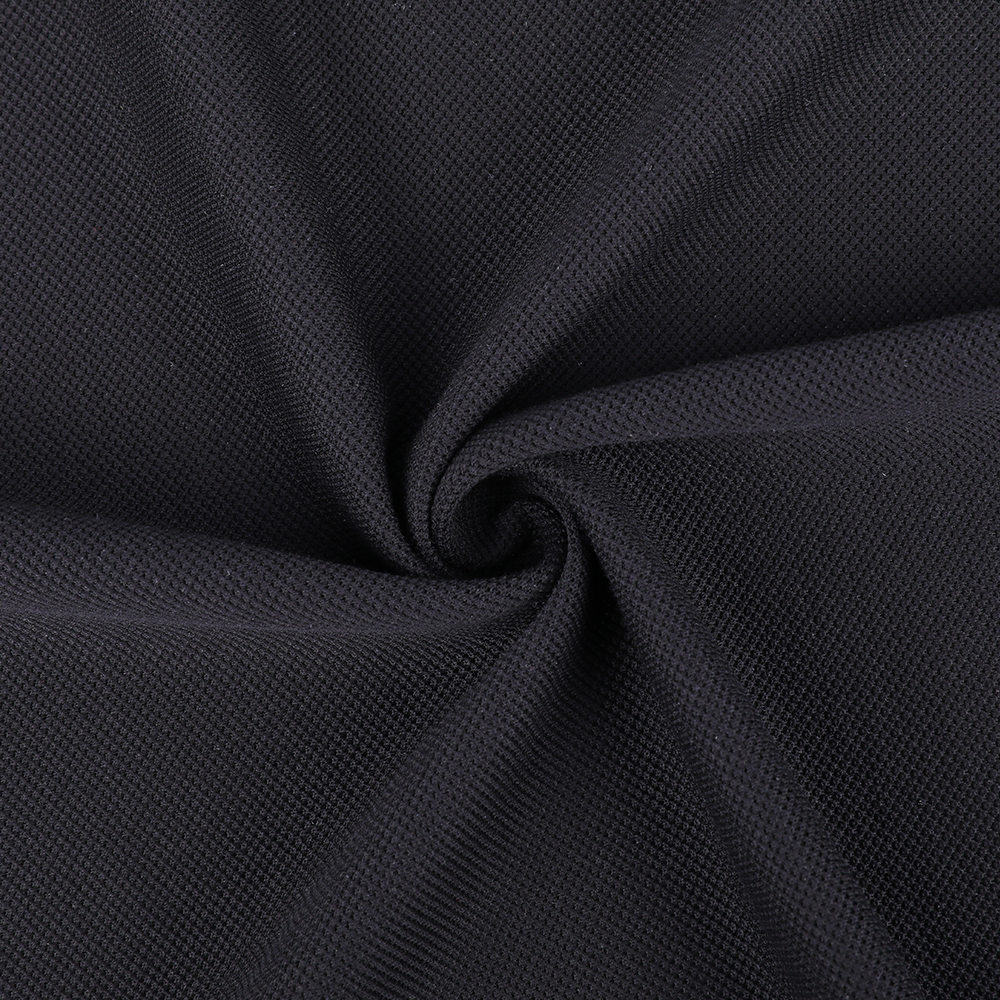
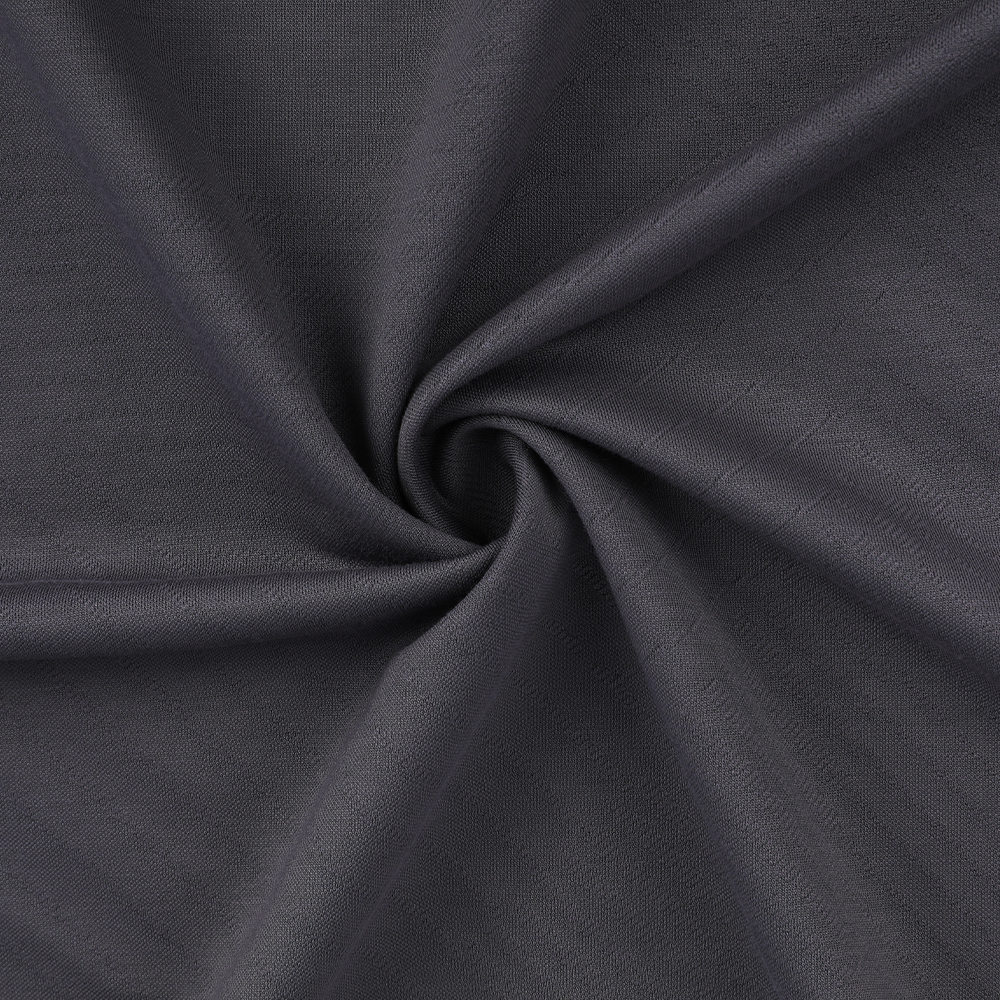
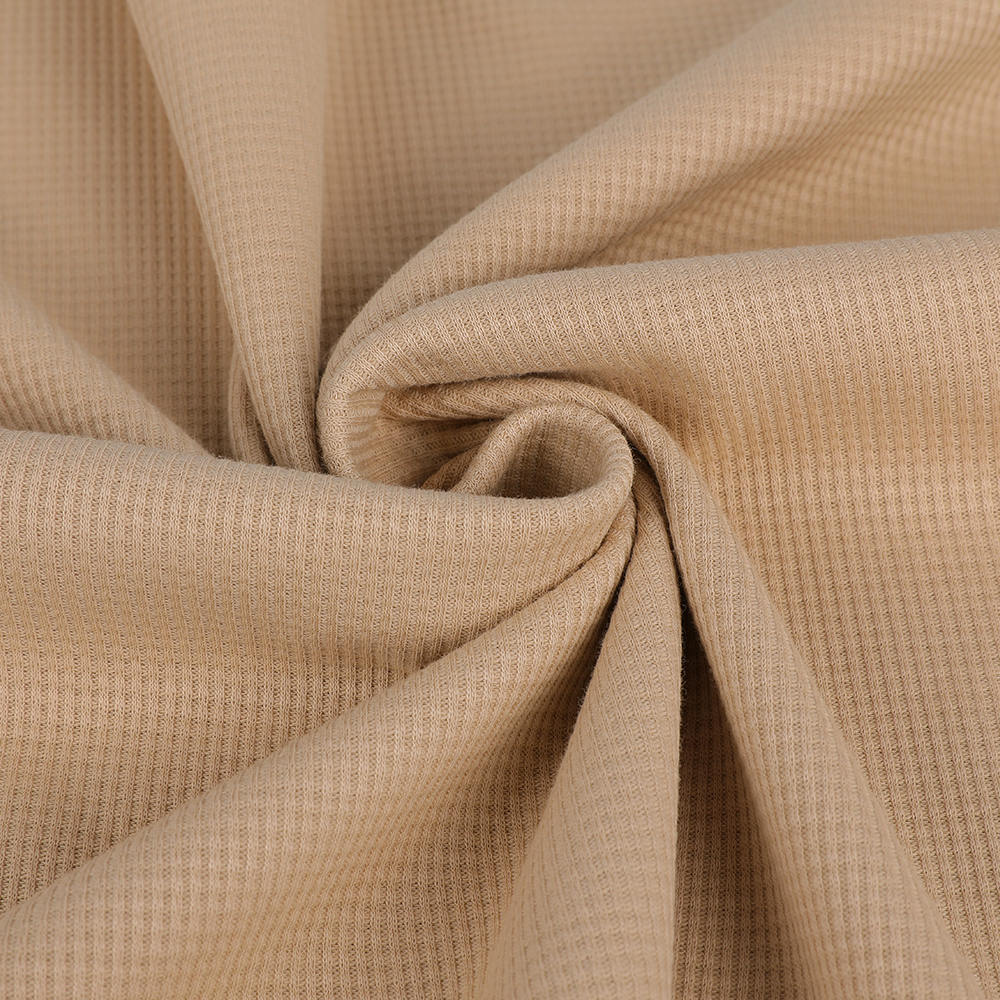
The surface texture and drape of a fabric are direct results of its construction. Single jersey knit, the most common best knit fabric for t shirts, produces a smooth face and a lightly textured back, offering a soft, fluid drape that conforms to the body. A comparison arises when considering jersey vs pique knit for t shirts. Pique knit, with its raised geometric pattern (like a honeycomb), provides a crisper, more textured hand and superior air permeability due to its structured cavities, but is generally less supple than a plain jersey.
Standard woven fabrics, such as poplin, offer a flat, uniform surface. While potentially smooth, they lack the inherent pliability of knits, resulting in a drape that is more architectural than organic. This makes them less ideal for the close-fitting, fluid silhouette expected of a modern T-shirt.
| Comfort Parameter | Knit Fabric (e.g., Jersey) | Woven Fabric (e.g., Poplin) |
| Surface Conformity | High; molds to body contours. | Low; maintains its own plane. |
| Inherent Stretch & Recovery | High multi-directional stretch (often 20-30% cross-grain). | Negligible (unless elastane is added). |
| Drape & Fluidity | Soft, fluid, and forgiving. | Crisp, structured, and defined. |
| Skin Contact Sensation | Consistent, low-friction contact. | Can create pressure points at seams and joints during movement. |
Thermoregulation and Moisture Management
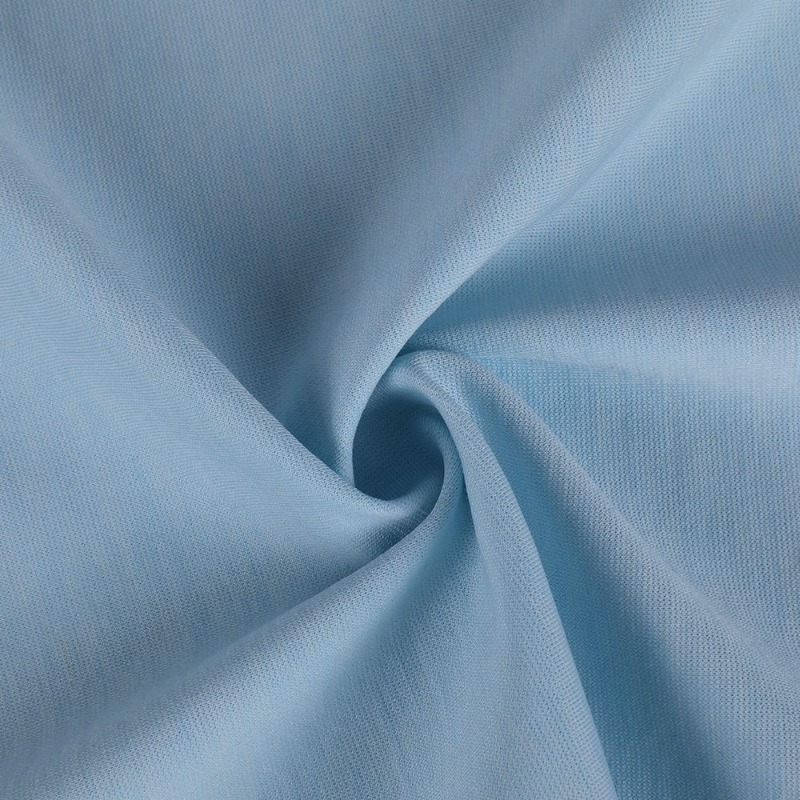
The loop structure of knits creates micro-air pockets, facilitating breathability. This is critical for best lightweight knit fabric for summer t shirts, where optimal air circulation and moisture vapor transmission are required. Lightweight jersey knits (typically 120-150 GSM) excel in this role. Woven fabrics regulate heat primarily through fiber choice and yarn density; a tight plain weave can trap heat, while an open weave like oxford may breathe but lacks the stretch needed for a T-shirt.
According to the latest research compiled by the Textile Institute, advanced knit structures are being engineered with varying loop densities across the fabric to create targeted moisture-wicking and ventilation zones, a level of functional gradation difficult to achieve in standard woven constructions. This innovation underscores the knit fabric's superior adaptability in active and casual wear applications.
Source: The Textile Institute - Advanced Thermophysiological Comfort in Knitted Fabrics
Durability and Longevity: A Performance Trade-off
Durability encompasses resistance to abrasion, pilling, tearing, and dimensional change over time and use.
Abrasion Resistance and Pilling
Woven fabrics generally exhibit superior surface abrasion resistance due to their tight, locked structure. The floating yarns in a knit are more exposed to friction, making them susceptible to pilling—the formation of small fiber tangles on the surface. This is a key factor in how to identify high quality jersey fabric. High-quality jersey uses long-staple, combed yarns that are tightly spun and properly singed to minimize loose fibers, thereby significantly reducing pilling propensity. A common compromise is the use of a polyester cotton blend t shirt fabric, where the synthetic polyester component dramatically enhances abrasion and pill resistance compared to 100% cotton, though it may slightly alter the hand feel and moisture absorption.
Tensile Strength and Dimensional Stability
Here the strengths invert. A woven fabric has high tensile strength but, once a yarn breaks, the tear can propagate easily along the straight grain. A knit fabric distributes stress across multiple interconnected loops; a single broken loop is often contained, preventing a catastrophic tear. However, knits are prone to bias stretching and growth over time, especially if under tension during wear or washing. This is where fabric weight guide and fiber blend are critical. A heavier jersey (180-220 GSM) or one blended with polyester will offer much better shape retention than a lightweight, 100% cotton knit.
| Durability Metric | Knit Fabric (e.g., Jersey) | Woven Fabric (e.g., Twill) |
| Surface Abrasion/Pilling | Moderate to Low (depends on yarn quality/finish). | High (excellent resistance). |
| Tear & Burst Strength | Good; stress is distributed across loops. | High initially, but prone to progressive tearing once breached. |
| Dimensional Stability (Growth) | Lower; can stretch out with wear/washing. | Very High; minimal stretch or growth. |
| Seam Durability | Requires stretch stitches (e.g., coverstitch) to prevent popping. | Standard lockstitch seams are very strong. |
Fiber and Construction Synergy: The Complete Performance Picture
The base fiber is a performance multiplier. An organic cotton jersey fabric weight guide is essential for designers: a 140 GSM organic cotton jersey offers a breezy, eco-conscious summer tee, while a 220 GSM version provides a substantial, durable year-round garment. The inherent benefits of knit structure are thus modulated by fiber choice—merino wool knits add temperature regulation, linen knits enhance breathability and texture, while synthetic blends prioritize durability and shape retention.
Mastering this synergy is the hallmark of a technical manufacturer. A company like Jiaxing Jinkaiyue Knitted Fabric Co., Ltd., founded in 2000, exemplifies this integration. By utilizing advanced circular knitting machines from global technology leaders, Jinkaiyue can produce not just basic jersey, but complex structures like single-blister stitch or six-course Punto di Roma. This allows for the engineering of fabric properties—such as varying elasticity, texture, and opacity—directly into the knit. Their focus on high-end fibers like mulberry silk, long-staple cotton, and cashmere ensures the raw material complements the sophisticated construction, enabling the creation of knit fabrics that push the boundaries of comfort while addressing durability concerns through precision engineering and quality fiber selection.
Strategic Selection Guidelines for Product Development
- Choose Knit Fabrics When: The design priority is dynamic comfort, stretch, conformity, and casual drape. This includes all standard T-shirts, polo shirts, activewear, loungewear, and intimate apparel. The selection within knits (jersey, pique, rib) then fine-tunes texture and performance.
- Choose Woven Fabrics When: The design requires structural rigidity, sharp tailoring, crisp seams, and maximum dimensional stability. This includes dress shirts, blazers, trousers, outerwear shells, and technical workwear where abrasion resistance is paramount.
- For T-Shirt Optimization: Start with a high-quality jersey or pique knit. Select fiber composition (e.g., long-staple cotton, polyester blend) based on desired hand feel, durability, and care. Finally, specify the exact GSM (fabric weight guide) to achieve the intended drape, opacity, and seasonal suitability.
Frequently Asked Questions (FAQ)
1. Is a heavier knit fabric always more durable for a T-shirt?
Generally, yes, within the same fiber type. A higher GSM (grams per square meter) indicates more yarn per unit area, leading to better abrasion resistance, reduced transparency, and improved shape retention. However, durability is also a function of yarn strength (long-staple vs. short-staple), spin quality, and fiber blend. A 150 GSM fabric made from a premium, combed long-staple cotton/polyester blend can be more durable than a 180 GSM fabric made from lower-grade short-staple cotton.
2. Can woven fabrics be as comfortable as knits for casual wear?
For static, loose-fitting garments, certain lightweight, soft wovens (like fine voile or soft brushed twill) can be comfortable. However, they cannot replicate the all-directional stretch and continuous conformity of a knit during movement. For the close-fit and dynamic range of motion required in a T-shirt, the knit structure is fundamentally superior for comfort.
3. What is the main durability disadvantage of 100% cotton jersey, and how is it solved?
The main disadvantages are a higher tendency to shrink, wrinkle, and lose shape (grow) over time compared to blends. This is addressed in several ways: using pre-shrunk (sanforized) cotton, knitting with a tighter gauge, or—most commonly—blending with synthetic fibers like polyester. This is the key pros and cons consideration for polyester cotton blend t shirt fabric: it sacrifices a small degree of the pure cotton's natural hand feel and absorbency for significantly enhanced dimensional stability, wrinkle resistance, and durability.
4. How does pique knit compare to standard jersey for durability?
Pique knit often has slightly better dimensional stability and is less prone to showing wrinkles than single jersey due to its textured, multi-yarn structure. In the jersey vs pique debate for polos or structured tees, pique can offer a compromise, providing some of the breathability and texture benefits while being marginally more resilient to stretching out than a lightweight jersey.
5. What are the key physical tests to specify when sourcing high-quality knit fabric?
B2B buyers should request data for: GSM (weight), Fabric Stretch & Growth (via strip or cycle testing to ASTM D3107), Pilling Resistance (e.g., Martindale or Random Tumble Pilling Test per ASTM D4970), and Dimensional Stability after laundering (per AATCC 135). These quantifiable metrics provide an objective basis for evaluating the best knit fabric for t shirts beyond subjective hand feel.