
 English
 日本語
日本語 中文简体
中文简体
Content
- 1 Quantifying Foundational Fabric Properties: The Base of Quality
- 2 Weave and Finishing: Defining Style and Function
- 3 Design and Supply Chain Alignment
- 4 Comparative Analysis of Key Shirting Fabrics
- 5 Supplier Evaluation and Total Cost of Ownership (TCO)
- 6 Frequently Asked Questions (FAQ)
- 6.1 1. How do I verify the authenticity of "Egyptian Cotton" or "Supima" claims from a wholesale supplier?
- 6.2 2. What are the main differences between reactive dyeing and pigment printing for custom fabrics?
- 6.3 3. What is a reasonable fabric shrinkage tolerance for quality shirting?
- 6.4 4. How important is the thread density (thread count) versus the yarn count?
- 6.5 5. When sourcing heavyweight fabric for workwear, what specific tests should I request?
For apparel manufacturers and brand owners, the decision of where and how to source cotton shirt fabric wholesale is a fundamental strategic choice that directly impacts product quality, cost structure, brand reputation, and supply chain resilience. This fabric serves as the literal foundation of the garment, influencing its drape, comfort, durability, and overall aesthetic. This guide provides a comprehensive, engineer-level framework for evaluating and procuring wholesale cotton shirting, moving beyond price per yard to a holistic analysis of fiber science, fabric engineering, and supply chain dynamics.
Quantifying Foundational Fabric Properties: The Base of Quality
Informed sourcing begins with a technical understanding of the fabric's intrinsic properties, which are determined at the fiber and yarn stages.
Fiber Origin and Composition
The choice of cotton fiber sets the performance ceiling. Long-staple varieties like those sourced from an Egyptian cotton poplin fabric wholesale supplier offer superior strength, fineness, and a characteristic silky luster due to their extra-long, uniform fibers. In contrast, upland cotton provides excellent value for standard applications. The market for sustainable fibers is robust, but verifying claims is essential. The organic cotton shirting fabric wholesale price should be supported by transaction certificates from recognized standards like the Global Organic Textile Standard (GOTS), which tracks the fiber from farm to finished fabric.
Yarn Count, Construction, and Weight
These interlinked specifications define the hand feel and durability.
- Yarn Count: Measured in Ne (English count) or metric count, a higher number indicates a finer yarn, leading to a softer, more lustrous, and potentially more delicate fabric (e.g., 80s, 100s). Two-ply yarns, where two singles are twisted together, offer enhanced strength and stability compared to single-ply.
- Thread Density: The number of warp and weft threads per square inch. A higher density generally translates to a smoother, more durable, and less transparent fabric.
- Fabric Weight: Expressed in grams per square meter (GSM). Weight dictates seasonal appropriateness and end-use. The requirements for heavy weight cotton shirt fabric wholesale for workwear (typically 200-300+ GSM) prioritize durability, abrasion resistance, and tear strength over the lightweight breathability sought in summer dress shirts (100-140 GSM).
Weave and Finishing: Defining Style and Function
The construction and final treatments applied to the fabric give it its character and performance attributes.
Primary Shirting Weaves
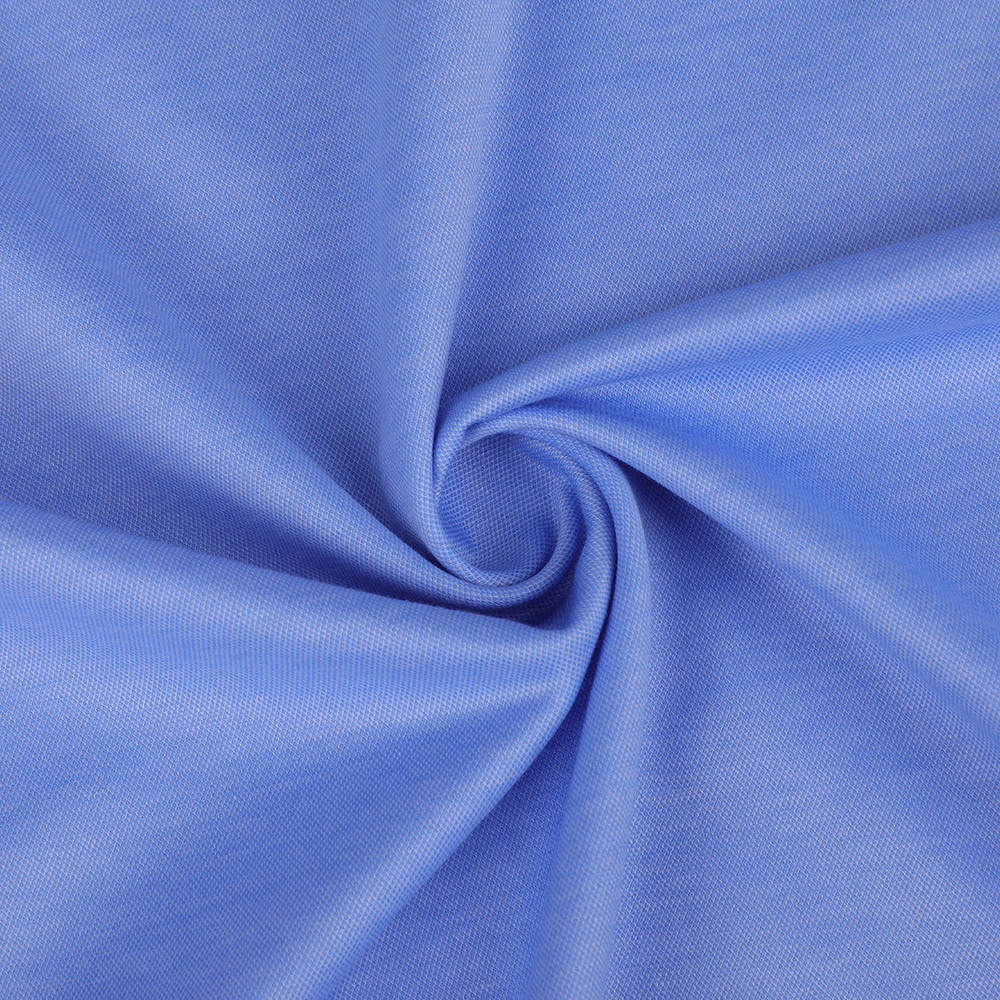
Each weave structure creates a distinct look and feel. When sourcing 100% cotton Oxford cloth fabric wholesale for shirts, one expects a basket-weave structure with a heavier, more textured, and casual appearance, often using a dyed warp and white filling yarn. Poplin, in contrast, is a fine, plain weave with a crisp hand, while twill (like denim) offers diagonal lines and excellent durability. Understanding these distinctions is crucial for aligning fabric with design intent.
Critical Finishing Processes
Finishes transform greige (unfinished) fabric into a ready-to-sew material.
- Sanforization: A compressive shrinking process that controls residual shrinkage to below 1%, which is critical for maintaining garment size consistency.
- Easy-Care/Non-Iron: A resin-based finish that cross-links cellulose fibers to reduce wrinkling. The quality of this finish affects durability through wash cycles and fabric breathability.
- Softening, Mercerization, and Pre-washing: These processes enhance hand feel, increase luster and dye affinity, or create a broken-in look, respectively.
Design and Supply Chain Alignment
The practicalities of integrating fabric into your production pipeline are as important as the fabric's quality.
The demand for unique designs drives the market for custom printed cotton shirt fabric wholesale. This process involves significant lead times and minimum order quantities (MOQs). Key decisions include the printing technique—reactive dyeing for vibrant, breathable prints on cellulosic fibers versus pigment printing for a wider color gamut and lower cost, but with a potentially stiffer hand. Sourcing such specialty fabrics requires close collaboration and clear communication of color standards (e.g., Pantone references) and print repeat specifications with the supplier.
Beyond design, core commercial terms must be managed. These include MOQs (which can range from a few hundred to thousands of meters per color/design), roll lengths, cuttable width (utilization efficiency), and reliable lead times that sync with your production calendar.
Comparative Analysis of Key Shirting Fabrics
Selecting the right fabric involves comparing the technical and aesthetic profiles of different weaves and weights to match the end-use requirement.
| Fabric Type / Weave | Typical Weight (GSM) | Key Characteristics | Ideal Application |
| Poplin (Plain Weave) | 100 - 130 | Smooth, crisp, slight sheen, fine yarns. | Dress Shirts, Business Wear |
| Oxford (Basket Weave) | 140 - 180 | Textured, robust, casual appearance, durable. | Casual Shirts, Sportswear |
| Heavyweight Twill/Canvas | 200 - 300+ | Very durable, diagonal line, stiff drape. | Workwear, Uniforms, Utility Jackets |
| Chambray (Plain Weave) | 110 - 150 | Denim-like look (colored warp/white weft), soft. | Casual & Lifestyle Shirts |
Supplier Evaluation and Total Cost of Ownership (TCO)
Partnering with the right supplier is a strategic imperative. Due diligence should extend beyond price to assess manufacturing capability, quality control labs, compliance certifications (ISO, BSCI, GOTS), and financial stability. A reliable partner for cotton shirt fabric wholesale will provide comprehensive technical data sheets and support with sample development.
The industry is undergoing a significant transformation driven by technology and sustainability. According to a 2024 industry analysis by the International Apparel Federation (IAF), the adoption of AI-powered sourcing platforms is projected to grow by over 30% annually, helping manufacturers match fabric specifications with supplier capabilities more efficiently. Simultaneously, data from the Textile Exchange's 2025 Preferred Fiber Market Report indicates that the market share of preferred cottons (including organic, recycled, and transitional) continues to expand, now accounting for over 25% of total cotton consumption. This shift means that verifying sustainable claims, such as those behind the organic cotton shirting fabric wholesale price, through traceability systems and credible certification is no longer a niche concern but a mainstream procurement requirement.
Source: Textile Exchange - Preferred Fiber Market Report 2025
Source: International Apparel Federation (IAF) - Industry Insights
The true cost of fabric extends far beyond the unit price on an invoice. A Total Cost of Ownership (TCO) analysis factors in:
- Direct Costs: Fabric price, duty, shipping, and insurance.
- Utilization Costs: Fabric width, defect rate, and yield during cutting.
- Risk Costs: Potential for delays, quality inconsistencies leading to production rejects, or the need for emergency air freight.
Often, a slightly higher-quality fabric from a reliable supplier results in a lower TCO due to higher production efficiency, fewer defects, and greater customer satisfaction.
Frequently Asked Questions (FAQ)
1. How do I verify the authenticity of "Egyptian Cotton" or "Supima" claims from a wholesale supplier?
Authentic long-staple cottons like Egyptian or Supima (American Pima) are protected trademarks. Legitimate suppliers should provide a transaction certificate or license number from the relevant association (e.g., the Cotton Egypt Association for Egyptian Cotton). This documentation traces the certified fiber through the supply chain. Be wary of generic terms like "Egyptian-type" cotton, which do not guarantee the same fiber properties.
2. What are the main differences between reactive dyeing and pigment printing for custom fabrics?
For custom printed cotton shirt fabric wholesale, the choice is critical. Reactive dyes chemically bond with the cellulose fiber, resulting in prints that are exceptionally colorfast, soft, and breathable—they become part of the fabric. Pigment printing uses binders to adhere color to the fabric surface. It offers brilliant colors and is cost-effective for small runs but can create a stiffer hand and may crack or fade with repeated washing if not done well. Reactive dyeing is preferred for high-quality apparel.
3. What is a reasonable fabric shrinkage tolerance for quality shirting?
For shirting that has been properly sanforized, residual shrinkage should not exceed 1% in either the warp (length) or weft (width) direction. Always request and review the supplier's shrinkage test report (conducted per AATCC or ISO standards) before bulk ordering. Non-sanforized fabrics can shrink 5% or more, which must be accounted for in pattern making and cutting.
4. How important is the thread density (thread count) versus the yarn count?
Both are crucial and interconnected. A high yarn count (fine yarn) with a low thread density will produce a loose, gauzy fabric. A medium yarn count with a very high thread density produces a dense, crisp, and durable fabric like a high-quality poplin. Evaluating them together gives the best picture: look for a balanced construction where the density is appropriate for the yarn fineness to achieve the desired durability and hand.
5. When sourcing heavyweight fabric for workwear, what specific tests should I request?
For heavy weight cotton shirt fabric wholesale for workwear, prioritize tests that measure durability and safety. Key requests include:
- Abrasion Resistance: Martindale or Wyzenbeek test cycles.
- Tear Strength: Elmendorf test (ASTM D1424).
- Tensile Strength: Strip test (ASTM D5035).
- Colorfastness: To washing, rubbing (crocking), and light.
- Flame Resistance (if required): Relevant standards like NFPA 2112 or industry-specific tests.
A professional supplier should readily provide data from an independent lab for these key metrics.