
 English
 日本語
 中文简体

Content
- 1 Why Knit Fabrics Force a Different Machine Setup
- 2 Match the Needle and Stitch Type to the Knit Structure
- 3 Differential Feed and Tension Decide Whether the Seam Waves
- 4 Fabric Specification Sets the Ceiling on Sewability
- 5 Three Checks Before the Line Goes to Bulk
- 6 Questions That Come Up on the Sewing Floor
A four-thread overlock set at 3.5 mm stitch length with a 75/11 ballpoint needle will carry a seam in 160 gsm cotton single jersey to roughly 40 percent extension before a looper thread breaks. Swap only the needle for a 90/14 sharp point, change nothing else, and the same seam fails between 12 and 15 percent. No other adjustment in a sewing room moves a knit seam that fast, and that gap is why a sewing machine for knit fabrics cannot be commissioned the way a woven line is.
Knit garments fail at the seam far more often than they fail in the body cloth. The loop structure that gives jersey, interlock, pique and ponte their stretch also lets the fabric deflect under the descending needle, so stitch formation depends on needle geometry, feed differential and thread extension working as one system. Align those three and a 40/1 combed cotton jersey runs at 5,000 stitches per minute without a skipped stitch; misalign them and the identical fabric produces wavy hems at half that speed.
Why Knit Fabrics Force a Different Machine Setup
Knit fabric stretches 20 to 60 percent in the course direction as it passes the needle plate, so every setting on the machine has to accommodate that movement instead of resisting it.
In a weft-knitted structure the yarn is drawn into intermeshing loops rather than interlaced under tension. When the needle descends, the cloth can shift sideways and downward instead of being held flat. Three failures follow directly from that behaviour:
- Needle deflection. A sharp point cuts filaments in fine-gauge jersey, opening a hole that grows after the first home wash and is invisible at the sewing table.
- Skipped stitches. If the old loop is not cleared cleanly, the needle catches two loops or none, and the fault shows up as a ladder three metres down the seam.
- Seam grin. Low-extension thread limits how far the seam can travel, so the seam becomes the weak point of an otherwise sound garment.
Seam extensibility is the percentage a finished seam can stretch before any thread in it breaks, measured to ISO 13935-2. On knit apparel the seam has to reach at least 85 percent of the fabric's own stretch value, measured on the same course direction, or the stitch line becomes the point of failure in wear.
The practical consequence is that a machine is only half the answer. A flat-bed lockstitch machine rated for knit work will still crack a jersey seam at 15 percent if the thread and stitch type are chosen for woven cloth.
Match the Needle and Stitch Type to the Knit Structure
Ballpoint needles from 70/10 to 90/14 plus a 504 four-thread overlock cover most commercial knit seams, and the structure of the cloth decides which end of that range applies.
| Knit structure | Typical weight | Needle | Stitch type | Stitch length |
| Single jersey, 40/1 cotton | 140 to 190 gsm | 70/10 to 75/11 ballpoint | 504 overlock | 3.0 to 3.5 mm |
| 1x1 rib with elastane | 180 to 280 gsm | 75/11 ballpoint | 504 overlock | 3.5 mm |
| Interlock | 180 to 260 gsm | 75/11 ballpoint | 514 overlock or 406 coverstitch | 3.0 mm |
| Pique mesh | 170 to 230 gsm | 75/11 to 80/12 ballpoint | 504 overlock, 301 for plackets | 3.5 mm |
| Ponte Roma | 250 to 350 gsm | 80/12 to 90/14 ballpoint | 301 lockstitch or 516 safety stitch | 3.5 to 4.0 mm |
| French terry, fleece back | 240 to 330 gsm | 80/12 ballpoint, ELx705 for coverstitch | 516 safety stitch or 406 coverstitch | 4.0 mm |
Thread choice runs parallel to needle choice. A core-spun polyester at roughly 120/2 tex handles jersey and interlock, textured polyester or a woolly nylon in the loopers handles elastane-rich ribs, and a bonded filament is reserved for coverstitch hems where abrasion resistance matters. Needle heat is a real factor on polyester knits at high speed: a 75/11 ballpoint running at 5,000 stitches per minute can reach temperatures that fuse the filament, which is why needle lubrication and a light air blast are standard on high-volume knit lines.
Woven line setup
- Sharp point needle, 80/14
- Lockstitch 301, stitch length 2.5 mm
- Differential feed 1.0
- High needle and bobbin tension
Knit line setup
- Ballpoint needle, 75/11
- Overlock 504 or coverstitch 406, stitch length 3.5 mm
- Differential feed 1.3
- Lowest tension that closes the stitch
Differential Feed and Tension Decide Whether the Seam Waves
Set differential feed between 1.25 and 1.4 and keep looper tension at the minimum that closes the stitch cleanly; those two controls account for most wavy or puckered knit seams on an otherwise correct machine.
Indicative seam extension at break, four-thread overlock, ISO 13935-2 method
Commissioning a new knit follows a fixed order, and skipping a step is what turns a good fabric into a rejected consignment:
Measure course and wale stretch on a 100 mm marked sample, plus residual shrinkage after one wash to ISO 6330. These two figures set the target seam extension before a machine is touched.
Pick the needle and stitch type from the structure table. Any coverstitch operation needs an ELx705 needle, which has a reinforced scarf and a deeper groove for high-speed knit work.
Set 3.0 to 3.5 mm stitch length for jersey and interlock, 4.0 mm for fleece, then dial looper tension on scrap until the seam lies flat with no furrow.
Run a 300 mm seam, extend it by hand to the target percentage, wash it at 40 C, and re-measure. A seam that recovers within 5 percent of its original length is production-ready.
A knit seam should hold at 85 percent of the fabric's stretch. If it reaches only 60 percent, the thread or the stitch type is wrong, and re-training the operator will not fix it.
Fabric Specification Sets the Ceiling on Sewability
Weight tolerance, elastane percentage and finishing route fix a knit's sewing behaviour before it reaches the needle, and they cap what any machine setting can achieve.
At Jiaxing Jinkaiyue Knitted Fabric Co., Ltd., the finishing route is treated as a sewing variable rather than a marketing term. Liquid ammonia finishing, which the company runs as a dedicated product family across jersey, pique and interlock, relaxes the cotton loop, holds residual shrinkage at or below 3 percent when tested to ISO 6330, and removes most of the dimensional drift that produces wavy seams on untreated tubular cloth. The mechanics of that process are set out in this guide to liquid ammonia knit properties, and the sewing room sees the difference as a flat seam on the first pass instead of a third adjustment.
Ponte Roma is the most forgiving knit on any machine. At 250 to 350 gsm with two interlocked faces, it holds shape under a standard 301 lockstitch and needs nothing more exotic than an 80/12 ballpoint.
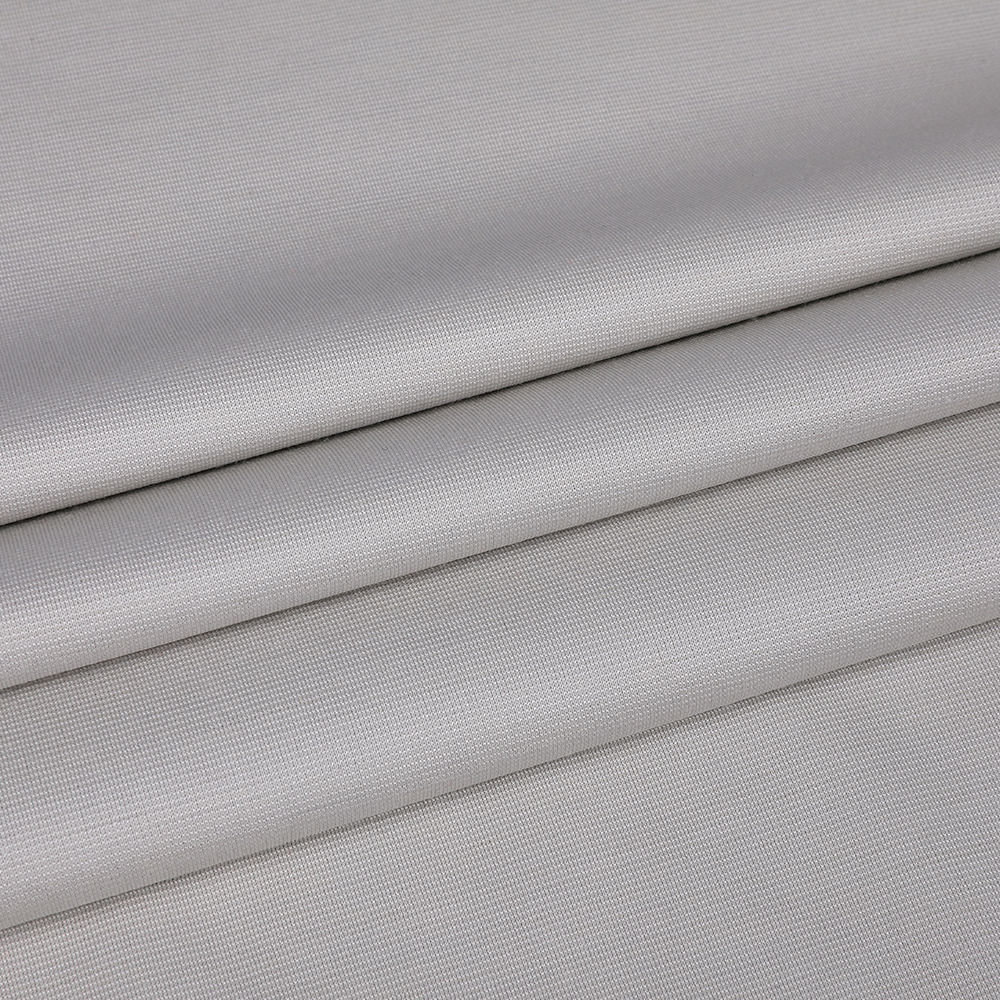 Silk-Wool Ponte Knit FabricA lightweight silk-wool Ponte knit for women’s dresses, jumpers and trousers, offering breathable comfort, shape retention and machine-washable care.View Product →
Interlock with silk and spandex sits at the other end of the scale: stable enough for a coverstitch hem, but slippery enough that presser foot pressure has to come down. Machine-washable grades keep the silk content practical for business clothing.
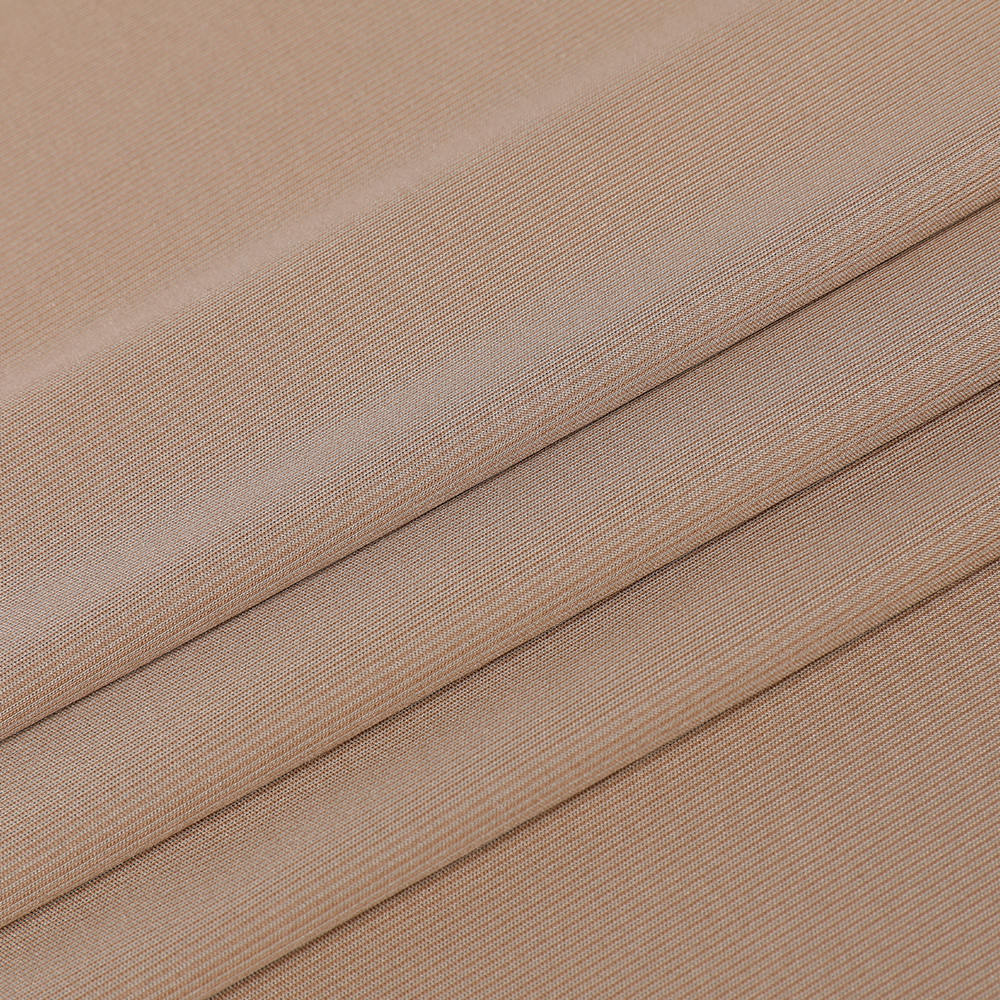 Machine-Washable Silk Interlock Fabric with SpandexA double-knit silk and spandex interlock for women’s high-end clothing, combining soft texture, natural luster, elasticity and easy machine-washable care.View Product →
Pique mesh for polo shirting shows every needle mark. A 75/11 ballpoint, reduced foot pressure and a 3.5 mm overlock stitch keep the mesh open, while the liquid ammonia route gives the surface the dimensional stability that stops the placket from cupping after the first wash.
 Supima Cotton Pique Mesh Polo FabricA breathable Supima cotton pique mesh with liquid ammonia finishing, suited to polo shirts and high-end garments that need shape retention and a smooth hand.View Product →
Elastane content is the single strongest predictor of seam trouble. Above 5 percent elastane, locked seams fail first because the thread cannot recover with the fabric; the test protocol for those cloths is covered in this high-elastic knit durability guide.
Three Checks Before the Line Goes to Bulk
Seam extension, seam strength and wash shrinkage catch about 90 percent of knit sewing failures before a bulk run starts, and all three can be completed on production samples inside one working day.
- Seam extension to ISO 13935-2. Extend a 200 mm seam at 300 mm per minute and record the extension at first thread break. Require at least 85 percent of the fabric's own stretch value.
- Seam strength to ISO 13935-2. Record break load on 50 mm wide specimens. A drop of more than 15 percent between two fabric batches signals a yarn count or finishing change long before the customer does.
- Dimensional stability to ISO 6330. Wash at 40 C, dry, and re-measure. Liquid-ammonia-treated knits should stay within 3 percent; untreated tubular cotton jersey commonly moves 5 to 8 percent and needs a cut allowance to match.
A seam that passes extension testing but fails after one wash is a shrinkage problem, not a sewing problem. Adjust the fabric specification or the cut allowance before touching machine settings.
Questions That Come Up on the Sewing Floor
What needle should a 180 gsm cotton jersey use?
A 75/11 ballpoint needle with a 3.5 mm overlock stitch length. At 180 gsm the cloth is dense enough to resist deflection, so the larger needle improves loop clearing without opening visible holes, provided the point stays ballpoint rather than sharp.
Can a machine built for wovens sew knits?
Yes, with three changes: a ballpoint needle, a low-extension thread, and reduced presser foot pressure. A 301 lockstitch caps seam extension at roughly 12 to 18 percent, so restrict it to stable structures such as ponte and double-faced interlock and keep 504 or 406 stitches on every seam that carries load.
Why does an overlock seam wave on interlock?
Differential feed at 1.0 combined with excessive looper tension. Raising the differential to 1.3 and dropping looper tension until the seam sits flat corrects the fault in almost every case, because interlock at 180 to 260 gsm has enough body to hold its own shape once the feed stops stretching it.
How much shrinkage allowance does a knit garment need?
Allow 3 percent for liquid-ammonia-finished knit and 5 to 8 percent for untreated tubular cotton jersey, measured to ISO 6330 at 40 C. Allowances taken from fabric-supplier test reports are only valid when the garment wash route matches the test route exactly.
Most knit sewing problems are specification problems wearing a machine-setting disguise. Confirm weight, stretch and shrinkage first, then choose the needle and stitch type, then tune the feed, and the settings that look difficult on a jersey line become routine.